

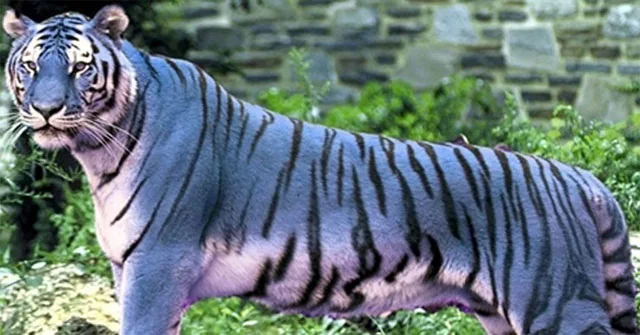
A tiger moves through a story wearing a coat the color of slate. Its stripes remain dark, but the orange seems washed into blue-gray. The blue tiger legend has traveled through books, reports, and online images, yet the central question remains simple: where is the animal that can be independently examined?
A name can make a report sound established
The Maltese tiger is a name used for reported blue-gray tigers, especially in accounts linked with China. It is not an accepted separate tiger species. The label describes a claimed appearance, and its familiar sound should not be mistaken for proof that scientists have documented the animal behind the name.
“Maltese” has also been used for blue-gray coloring in other animals. Here, the term gives readers a visual idea, rather than a secure place on a biological family tree.
Coat color can vary without confirming every story
Coat color depends on pigments, their distribution, and the genes that influence them. Tigers can show unusual coloration, but the existence of color variants does not confirm every reported shade. A proposed blue-gray form needs its own evidence, rather than borrowing certainty from better documented examples of animal color variation.
A genetic explanation may be plausible in broad terms while remaining untested in the specific case. Naming a possible mutation does not show that it occurred in a tiger.
A useful scientific account distinguishes between “this could happen through a pigment change” and “this change has been measured in a verified specimen.” The gap between those statements is substantial.
Related Stories


Eyewitness reports need more than vivid detail
A witness can report honestly and still misjudge color. Distance, shade, light, and memory all affect a sighting. Reports may justify a search, but independent records and physical material offer stronger support for a blue-gray tiger than a vivid account repeated on many websites.
None of this proves that every witness invented a story. It explains why honest observation still needs checking, especially when the claimed feature concerns a subtle and unusual color.
A digital image is a clue with a history
Cryptid stories often gain force from images shared without their original captions or sources. A blue tiger picture might be an illustration, an edited photograph, or an image altered by lighting and color balance. Its visual impact cannot establish what it depicts until its origin and processing history are examined.
An illustration can be valuable as an illustration. Trouble begins when a creative image loses that label and returns as supposed documentary proof of a rare animal in the wild.
A verified specimen would change the discussion
A verified specimen, reliable genetic material, or well-documented observations could move the blue tiger claim into a category of evidence. Until then, the responsible account keeps the legend distinct from confirmed zoology. That does not diminish tigers, whose documented diversity and conservation needs are already remarkable enough to deserve attention.
The story remains useful as a lesson in how animals become legends. A report acquires a name, the name attracts pictures, and repetition can begin to look like confirmation.
Following that chain backward restores the question that matters. What was actually observed, and what evidence survives for another person to examine without relying on the storyteller's confidence?
A museum label, a field record, and a tale told years later do not carry the same kind of detail.
Frequently Asked Questions
The strongest questions separate a named legend from a recognized animal, and a genetic mechanism from a tested one. These answers do not assume that an unusual sighting must be false. They explain why a claim about a rare tiger color needs evidence that other researchers can inspect and assess.
Is the blue tiger a recognized species?
No. The name refers to reports of unusual coloration, rather than an accepted separate species supported by a verified population and scientific description.
Do blue tiger photographs prove the claim?
An image needs a reliable origin and context before it can serve as evidence. Many circulating pictures are illustrations or have uncertain processing histories.
Could a tiger have an unusual pigment mutation?
Tigers can have genetic color variation. That general fact does not establish the particular blue-gray animal described in the legend or identify its supposed genetic cause.





