

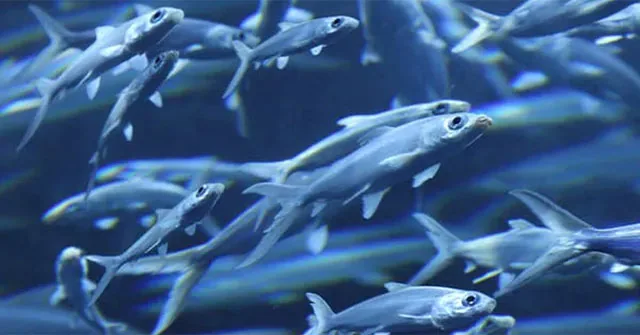
A shark lies flat on the bottom, its body barely moving. It may look as if something is wrong, yet stillness can be part of normal rest. Do sharks sleep?
Research supports sleep in some studied species, but the answer becomes more interesting when you stop treating every shark as the same kind of breathing machine.
Sleep needs evidence beyond a still body
Sleep requires more evidence than a still body. In draughtsboard sharks, researchers measured behavior and oxygen use, finding lower energy use during sleep. The result supports a real sleep state in the studied animals, but it does not describe every shark species in every habitat.
Scientists still need to study more species and settings. Evidence from one kind of shark cannot be stretched into a complete description of every shark living in every part of the ocean.
Some sharks can move water without swimming
Buccal pumping allows some sharks to draw water through the mouth and across the gills while they remain relatively still. Gill flow brings oxygen into contact with the surfaces that absorb it. This ability helps explain why a bottom-resting shark does not necessarily need to keep swimming to breathe.
Other species rely more heavily on ram ventilation, in which forward movement helps drive water over the gills. Breathing methods differ across sharks and can also vary with activity.
The familiar claim that all sharks die if they stop swimming erases these differences. It turns a feature of certain species into a rule for an entire diverse group.
Related Stories


Open eyes do not settle the question
Eye position is an unreliable guide to sleep in some sharks. In studied draughtsboard sharks, body posture and lower metabolic activity provided stronger evidence than eye closure alone. Resting sharks may therefore look awake who expects sleep to resemble a person lying in bed with both eyes shut.
An animal's visible behavior needs to be read in the context of its anatomy and surroundings. Human sleep habits are a poor universal checklist.
A flat posture can be useful evidence in a particular study, but it is not a field diagnosis for every shark photograph. The timing and the animal's responses also matter.
Different species leave different research problems
Species that rest on the bottom and species that keep moving pose different research problems. Scientists use behavior, breathing, metabolism, and other measurements to investigate sleep. No single clue answers every question, and mammal sleep patterns should not be assigned to sharks without direct supporting evidence.
That idea needs direct evidence in the animal concerned. A neat explanation can spread quickly online even when the underlying comparison has not been demonstrated across the species being discussed.
Rest makes the shark story more complete
Understanding sleep gives sharks a richer daily life than the endless chase shown in films. They balance movement, feeding, recovery, and the demands of breathing in ways suited to their bodies. The evidence replaces a dramatic rule with a more varied picture of animals shaped by habitats and evolutionary histories.
Those clues turn the quiet animal into an active scientific question. The apparent lack of action may be the very thing that helps researchers understand why sleep evolved and what it does.
Rest can also be confused with illness or stress in an isolated clip. A study uses repeated records and defined tests to avoid that mistake.
Drowsy behavior needs context before it can be treated as evidence of sleep.
Frequently Asked Questions
These questions separate sleep from simple stillness and compare shark breathing methods. Not every species needs constant swimming, and open eyes do not always mean wakefulness. The strongest answer names the animal studied and explains which measurements support the sleep claim instead of relying on a photograph.
Must every shark swim all the time?
No. Some can pump water over their gills while resting. Other species depend more strongly on forward movement for effective ventilation.
Have scientists measured sleep in sharks?
Yes, studies of species including draughtsboard sharks provide behavioral and metabolic evidence. This does not mean that every shark's sleep is equally well understood.
Does a shark with open eyes have to be awake?
No. Eye closure alone is a poor sleep indicator in some studied sharks. Researchers use several signs together rather than relying on the eyes.





