

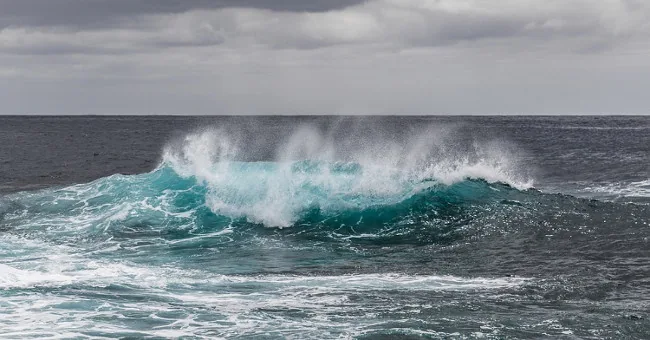
Rain falls fresh, rivers cross the land, and the sea receives them all. Yet the ocean stays salty. The answer to why is the ocean salty lies partly in what rivers carry without showing it, and partly in what leaves the sea when water rises back into the air.
Clear river water carries invisible cargo
Rock weathering releases dissolved ions into moving water. Rivers carry some toward the sea, even when they look clear. Sodium and chloride are major seawater components, but ocean salt includes a mixture with different sources and chemical histories, not just visible grains washed from one place.
Rainwater interacts with minerals in soil and rock. Over long periods, countless small exchanges contribute material to the sea.
A river need not taste like seawater to matter. A low concentration moving in a large volume of water, year after year, can still carry a substantial load.
Evaporation leaves most of the salt behind
Evaporation lifts water into the air while leaving most dissolved salts behind. The vapor later helps form clouds and rain. Sea spray can carry salty droplets, but that is a separate process, explaining why freshwater rain and salty seawater can belong to the same water cycle.
Sea spray can carry salt into the air, but that process differs from evaporation. Tiny liquid droplets contain seawater, while water vapor itself does not carry the dissolved salt mixture.
This difference explains why collecting condensed vapor can remove salt. It also explains why leaving seawater in an open container makes the remaining liquid more concentrated as water disappears.
Related Stories

The seafloor also exchanges chemicals with seawater
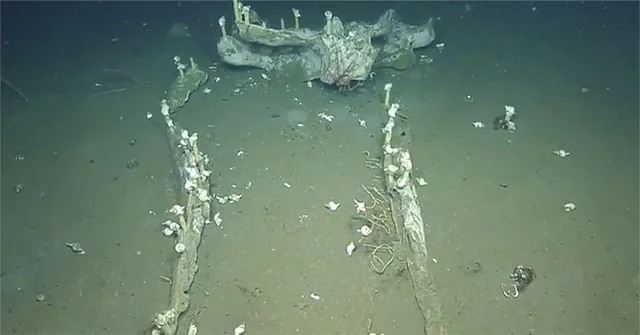
Hydrothermal exchange occurs when seawater moves through hot rock beneath the ocean floor. Chemical reactions can add some substances and remove others before the water returns. The ocean's composition reflects more than river input, and the seafloor acts as part of an active chemical system rather than an inert container.
These processes help explain why the sea does not simply grow saltier forever at a fixed rate. Inputs and removals operate together, although their balance and timing differ among substances.
Salinity changes from one place to another
Salinity measures dissolved salt content. Rain, evaporation, rivers, ice, and circulation change it from place to place. Many open-ocean waters contain roughly thirty-five grams of salt per kilogram, but estuaries and enclosed basins can differ, so that average is not a rule for every shore or depth.
The patterns matter for living things and ocean motion. Salt content affects density, alongside temperature and pressure, helping shape how water masses meet and move.
A salty ocean records a moving balance
Ocean chemistry reflects exchanges among rock, water, air, life, and the seafloor. Materials enter and leave through several processes. The salt balance is therefore a long history of linked reactions, not proof of one salting event or a bowl that receives river salts without ever losing any.
At the shore, watch the contrast between a river mouth and the open water beyond it. The surface may look continuous while its chemistry changes across the meeting point.
That quiet boundary connects a local stream with planetary processes. The taste of the sea carries a history written through countless small reactions, repeated across immense time and distance.
Salt can leave the water through the formation of minerals as well as through living systems. Which ions leave, and how fast, varies.
Frequently Asked Questions
Questions about ocean salt often begin with fresh rivers and end with evaporation. The missing piece is that water and dissolved materials follow different paths. These answers describe broad processes, while local measurements are needed to explain the salinity of a particular beach, estuary, enclosed sea, or deep-water mass.
Are rivers completely free of salt?
No. Rivers contain dissolved substances, usually at much lower concentrations than seawater. Their clear appearance does not mean that they carry only water molecules.
Does boiling seawater remove the salt?
Boiling alone leaves salt in the remaining liquid. Collecting and condensing the vapor is a separate process that can produce water with much less salt.
Is every ocean equally salty?
No. Rain, evaporation, rivers, ice, and circulation create regional differences. Even a single coastal location can change with season, tide, and freshwater input.





