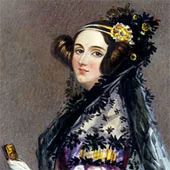
A machine that had never been built filled pages with gears and numbers. Ada Lovelace saw a wider question inside it: what else could such a system do? Ada Lovelace's notes matter because they explored the reach of a planned engine, while also showing how carefully its power depended on rules.
The engine was a design for more than one fixed task
Charles Babbage planned the Analytical Engine to follow sets of steps using stored values and instructions. It aimed beyond one fixed task, such as making one kind of table. The idea was broad, though no full working engine ran during Lovelace's lifetime to test all those plans.
Plans and working parts are not the same thing. Babbage left designs and built some pieces, but the full engine did not run in Ada's lifetime. The ideas still mattered.
They gave people a way to think through what a general machine might do before a complete one could be tested.
Translation became a much larger set of notes
In 1843, Lovelace translated Luigi Menabrea's account of the planned engine and added long notes. She explained how parts could work and what uses might follow. The notes became much more than a language task, giving readers a detailed way to think about a machine still being designed.
Lovelace and Babbage shared ideas through their work and letters. Giving her proper credit does not mean giving him none. The surviving pages let teams ask who proposed a step, who checked it, and how an idea grew.
Related Stories


A table showed how a sequence could be organized
One table set out steps for finding Bernoulli numbers on the planned machine. It is often called an early published program. The key point is the clear order of machine instructions, not just a claim that the engine might one day give a correct answer to a problem.
A goal says what you want. A program has to say how the machine gets there, step by step. A person can fill gaps in a loose account, but a set of gears cannot be expected to guess.
The table makes that need for exact steps much easier to see.
Numbers could stand for more than amounts
Lovelace saw that numbers could stand for things other than amounts. If links between signs could be stated as symbolic rules, a machine might work on those signs too. Music was one example, not a claim that gears already understood or felt the art they might help produce.
A number need not stand only for an amount. It can be assigned to a note or a sign. If the rules are clear, a machine may work on those signs too.
The human task is to state the rules and read the result, not to claim that gears already feel music.
The history is richer than a single first-place label
The title first programmer depends on what counts as a program and who did which work. Lovelace's notes can be read without settling every title. They contain both a worked method and a broad view of symbols, giving a firmer basis for credit than one famous label alone.
A title such as first programmer starts a debate about what each word means. The notes give us something firmer to read. They contain a worked method and a wider claim about symbols.
Both can be valued without pretending that all questions about the title have been settled.
Frequently Asked Questions
A planned engine, a real text, and a later title are three different things. These questions keep them apart. Lovelace's work matters for what it says, and the limits it states, as well as for the name that later readers gave to her place in computing.
Did Lovelace build the Analytical Engine?
No, Babbage developed the design, and a complete engine was not built in her lifetime. Lovelace's best-known contribution was her published explanation, notes, and worked sequence of operations.
Why is she often called the first programmer?
Her notes contain a detailed published procedure for the planned engine. Historians discuss the label's meaning and context. But the table remains an key early example of specifying machine operations.
Did she say a machine could create music?
She discussed processing musical relations if they could be expressed appropriately. That is a claim about symbols and rules, rather than a statement that a mechanical device already had human musical understanding.