

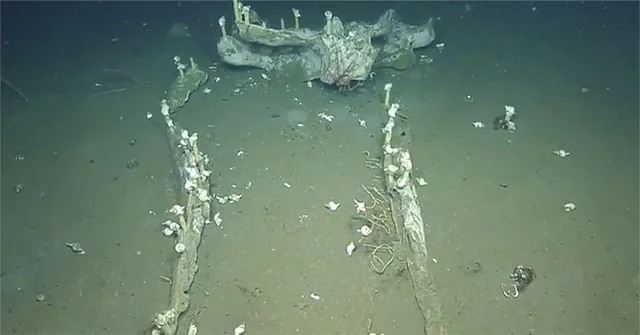
A whale sinks past the last light and comes to rest on the seabed. Its life has ended. But the meal is only beginning.
A whale fall ecosystem can turn one huge body into a changing patch of life, where each stage opens a different kind of feast in the deep.
A large carcass changes a food-poor patch of seabed
A whale body can bring a huge food supply to a patch of deep seafloor where food is often sparse. It draws life to one place, but the result varies with depth, local species, and how much body reaches the bottom. Not every fall has the same course or cast.
A wide area may receive only a slow rain of tiny food bits. Then one spot gets a whole body. That sudden change helps explain the feast.
Its value is not just the whale's size, but the contrast between this rich patch and the leaner ground around it.
The first visitors take accessible flesh
Scavengers can gather to eat the soft tissue and carry bits away. Fish, crabs, and other animals may join, depending on the site. This early phase is a broad pattern, not a fixed show with the same guests and a clock that runs alike at every whale fall.
Fresh flesh may draw a crowd; a later trip may find bones and quieter ground. Both views matter. Neither one frame can name all the life that came, fed, and left while the camera was somewhere else.
Related Stories

Enriched sediment supports another phase of life
Bits of flesh and waste enrich the nearby sediment and the body itself. Small animals can feed in that rich ground while other life uses the bones. The whale fall ecosystem therefore spreads beyond the outline of the whale and changes as different parts of the food store run out.
The stages can overlap. Flesh may remain in one place while bone is exposed in another. Thinking of a changing patch is more useful than trying to pick one exact day when the whole site switches from one community into a completely different one.
Bone can become a source of chemical energy
Microbes can break down fats in some whale bones and produce sulfide. Sulfide bacteria use chemical energy, helping support a later phase of life without direct sunlight there. This chemosynthesis gives a dark site another source of food after much of the easy flesh has been eaten and carried away.
It is not energy from nothing. The whale stored resources from its earlier life, and new organisms find ways to use what is left. A hard bone can be a rich store to them, even when it seems like an empty frame to a larger scavenger passing by.
Specialized worms reveal how strange the later feast can be
Bone worms called Osedax use rootlike tissues and bacterial partners to gain resources from bone. They do not chew like tiny mammals. Their bodies show how one animal's exhausted meal can remain useful to another, extending the whale's role as a food source after the most obvious feast has ended.
A broad camera view may miss much of this work. Life can act within bone, around roots, or among grains of sediment. Repeat visits help show the change, while close studies explain why a site that now looks quiet may still be using the body's last stores.
Frequently Asked Questions
These questions explain the stages without turning them into a rigid schedule. Whale falls vary with the animal and the place where it lands. The broad pattern is a shifting use of resources, from flesh to enriched sediment and, under suitable conditions, the chemistry of fats remaining within the bones.
Does every dead whale reach the deep seabed intact?
No, some strand, float, break apart, or are consumed before sinking. The communities described at deep whale falls depend on what actually reaches the bottom and the conditions there.
Can the bones support life after the flesh is gone?
Yes, Fats and other resources in bone can sustain microbes and specialized organisms. The exact duration and community vary. So one observed fall should not set a timetable for all others.
Do these communities need sunlight at the seabed?
Not directly for every process. Some later-stage microbes use chemical energy, including sulfide-related pathways, although the whale's original food and the wider ocean connect the event to other energy sources.





