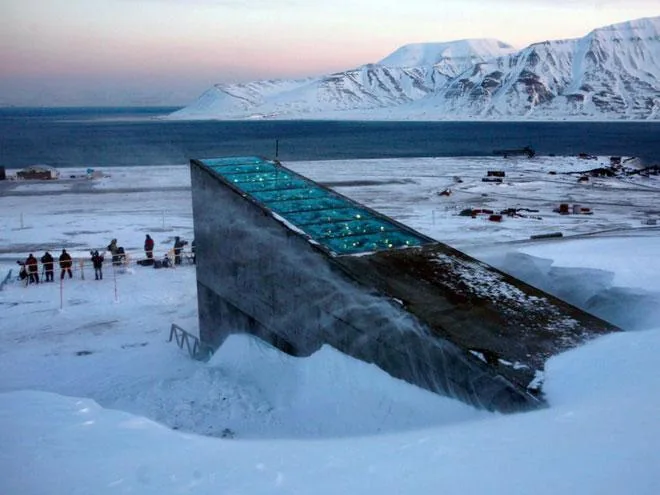
Behind a bright entrance in an Arctic mountainside, small packets rest in rows of cold storage. Their value is not what they can buy today. But what they might help restore tomorrow.
The Svalbard seed vault is a backup for crop collections, built around the patient task of keeping options alive.
The vault backs up collections kept elsewhere
The Svalbard seed vault stores duplicate samples from seed banks around the world. It is a backup, not a replacement for the work of those banks. A copy kept far from the first collection can help if that collection is lost, damaged, or unable to supply sound seed.
A backup is most useful when it is kept away from the first copy. If one store is lost, the other may still be sound. The vault serves that role for seed collections.
It is not one box of all life waiting to be opened after the world has ended.
Diversity preserves choices beyond today's best crop
Crop diversity keeps traits that may help when pests, disease, weather, or farming needs change. A line that is not today's best crop can still be worth saving. Keeping many seed lines preserves choices that may be hard to rebuild once their distinct mix of genes is lost.
A seed line that gives a modest crop today may still hold a trait worth saving. A pest, a disease, or a change in weather can make that trait useful later. Keeping many lines preserves choices.
Once a line is lost, the same mix of genes may be hard to get back.
Related Stories


Cold and dryness slow changes without stopping time
Dry packing and cold rooms help suitable seeds stay alive longer. They slow many changes but do not stop time or work for every crop. The method must fit the seed, and some plants need other forms of care rather than the same dry, frozen storage used here.
A seed is living stuff, even when very little seems to happen inside it. Cold helps with the seeds suited to this method, but it is not a spell that makes all plant material last forever.
Backups need records and renewal
Seed viability must be checked, and fresh seed may need to be grown before too much life is lost. Labels and records preserve each sample's identity. A well-kept packet is far less useful if no one knows what it holds or how it relates to the original line.
A label is part of the backup. A packet of sound seeds is much less useful if no one knows which crop line it holds. New seed may also have to be grown with care.
The aim is to keep the line, not let each round of growing turn it into something else.
A strong building does not remove the need for stewardship
A remote mountain and a strong building give useful protection, but the system still needs people and upkeep. Water, power, access, and records all matter. A backup can help after a local loss, so no worldwide disaster is needed for this second copy to have real practical value.
The mountain is one part of a working system. People still check the building, manage water, and care for records and seed stocks elsewhere. A local failure, conflict, or broken store can make a backup useful.
No global ending is needed for that quiet second copy to earn its place.
Frequently Asked Questions
Cold rooms, good labels, and a second copy work together. These questions place the vault beside the seed banks that use it, not above them as a cure for every risk. Seeds still need care, and not every plant can be saved by this one method of storage.
Does the vault contain every plant species?
No, it focuses on backup seed samples for crop conservation. Many plants are not represented, and some cannot be conserved effectively through the same drying and freezing methods used for these seeds.
Can seeds stay alive forever in a freezer?
No, Suitable conditions can extend life greatly, but viability changes over time and varies by species and sample. Conservation programs need monitoring, records, and sometimes regeneration of the material.
Is it only useful after a global catastrophe?
No, a backup can help when an individual collection suffers loss. Conflict, local disasters, equipment problems, and other disruptions can make a duplicate valuable without any worldwide collapse.