


A ping returns from dark water. It gives a clue, not a name. The echo might come from a wreck, a slope, or something far less rare.
How sonar works begins with sound, then the harder task of testing what made it return and how far it traveled.
How sonar works begins with a useful signal and the harder task of deciding what that signal actually means beneath the sea.
Active systems send a sound and wait
Active sonar sends sound into water and listens for an echo. Travel time can help estimate range if sound speed and the path are known. The result is not a perfect photograph; it depends on the system, water, target, and angle from which the sound meets the object being studied.
For a simple straight path out and back, divide the total distance traveled by two. Sound has to reach the target and return. That easy picture is useful, but real ocean paths can bend, so the first calculation is a model to test, not a final answer.
Passive listening asks a different question
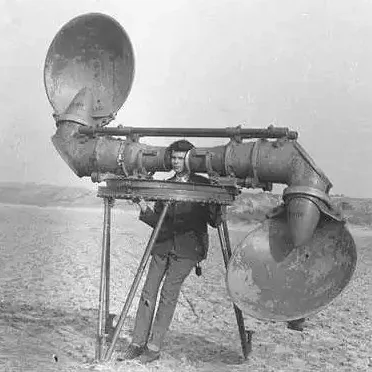
Passive sonar listens without sending its own locating pulse. It may detect sounds from motors, waves, animals, and other sources. A pattern or direction can be useful, but one listening point does not always give a clear distance or tell exactly which object made the sound it has picked up.
A quiet target can be hard to hear. A loud sea can hide a faint one. More receivers and repeat records can help, but listening works only with the sounds that reach the system, not with the details a search team would like the target to reveal.
Related Stories

Water conditions change the route of a signal
Sound speed changes with temperature, salt content, and pressure. Layers in the sea can bend its path, helping it travel in some regions and weakening it in others. A record of water conditions is therefore part of reading a signal, not just an extra detail after an echo appears.
The sea is not one empty room. Its layers and boundaries can guide, scatter, or reflect sound. A nearby source may be hard to hear from one spot and much clearer from another, which is why the water between target and receiver belongs in the explanation.
Echoes need interpretation as well as detection
An echo return depends on the target's size, shape, material, and angle, as well as the sound used. The seabed returns sound too. A strong mark can be worth checking without proving a wreck has been found, while a weak mark does not always mean the area is empty.
Teams map patterns over many readings, then may use a camera or another tool to check a suspected object. That is not a failure of sonar. It is how a clue becomes an identification when different methods test different parts of the same uncertain picture.
Ocean searches combine tools to reduce uncertainty
An ocean search may combine sonar, seabed maps, location estimates, water data, and direct images. Each tool narrows a different unknown. The area and conditions matter as much as one sensor, so even a large object can remain hard to find when its likely position is poorly constrained initially.
A plan asks where the object could be, what it might emit, and how it might reflect a sound. That patient work is the real story behind many finds far beneath the surface.
Frequently Asked Questions
An echo, a sound source, and a named object differ. These questions separate active transmission from quiet listening and explain why underwater noise matters. Water layers, terrain, and the target all shape a record, so a bright mark is a lead to test rather than a finished answer.
Does passive sonar send out a ping?
No, Passive systems listen to sound already present, while active systems send a signal and study what comes back. Each method has strengths and limits linked to the target and the water around it.
Can sonar see equally well through every part of the ocean?
No, Layers, noise, seabed shape, sound frequency, and angle affect the result. A search has to account for those conditions rather than assume the same clear view from every point in the water.
Does a strong echo identify a submarine or wreck?
Not alone. Many things reflect sound, so strength is only one clue. Pattern, shape, place, repeat readings, and sometimes direct images help turn a possible target into a sound identification.





