The sea was supposed to offer an escape from a burning ship. Against one Byzantine weapon, even that hope could fail.
Reports describe a burning liquid that spread terror across the water, turning a well-known battlefield into a place with no easy refuge.
The Greek fire mystery begins there. But it does not end with a missing recipe.
A fleet needed far more than a jar of fuel to make this weapon work.
A weapon built for a crowded sea
Greek fire was a burning liquid weapon linked to the Byzantine navy. It became famous during attacks on Constantinople, where ships helped protect the city. Its value came from a whole system of fuel, gear, trained crews, and skilled use at short range.
Picture wooden hulls moving toward each other, with ropes and sails above the decks. Fire threatened the working parts of a ship as well as the people aboard it.
That made liquid fire a powerful threat. Yet the sea also brought wind, waves, and the danger of burning your own vessel.
Using it needed judgment, not just nerve.
The secret was larger than a recipe
The lost formula stays debated because surviving descriptions do not give a full, proven recipe. Oil-based fuels are often proposed, but naming a possible fuel does not recover the old weapon. Scholars must also account for how the liquid was stored, moved, lit, and aimed.
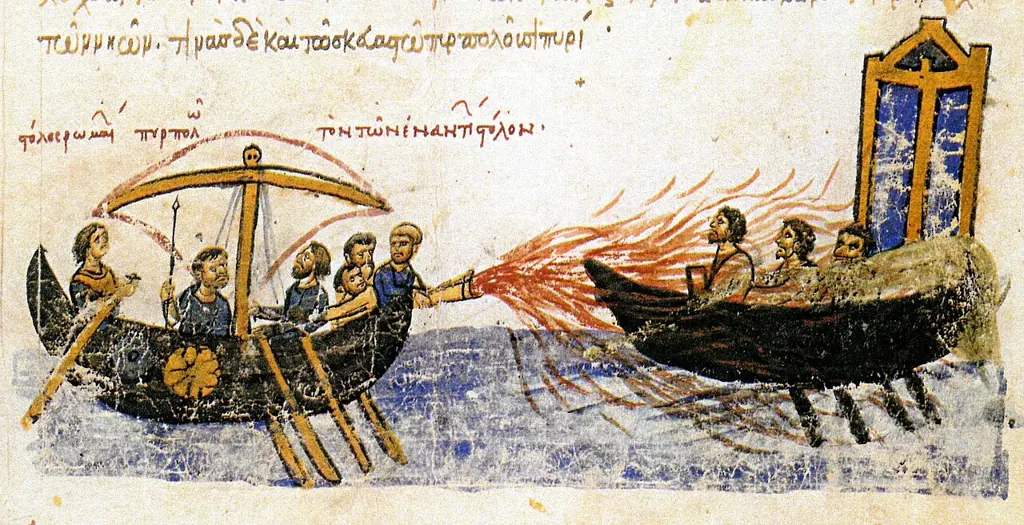
A shipboard siphon could send the mixture toward a target. Historical accounts and later images help reveal that arrangement, though they cannot show every hidden part.
Think of a musical instrument found without its player. Knowing the material does not teach you the tune.
In naval warfare, missing skills could matter as much as missing hardware.
Related Stories


What the pictures can really tell us
Medieval images show how later artists understood the weapon, rather than serving as photographs of a battle. A scene can support the broad idea of flame projected from a ship. It cannot show exact pressure, range, fuel proportions, or how every crew used the gear.
One well-known manuscript picture shows fire reaching from one vessel toward a second. It makes the terror easy to grasp.
But its striking shape is not a working plan.
That distinction protects the story from a common trap. A vivid picture can show how people viewed the weapon.
It may still tell us little about its inner parts. The two uses should never be confused.
Why the missing pieces still matter
Greek fire belongs among medieval weapons whose fame outgrew the surviving plans. It helped strengthen Constantinople defenses, but it did not make ships safe from all harm or explain every Byzantine success. Weather, supplies, leadership, and the wider war still shaped what happened around a burning patch of sea.
The more interesting question may be how an empire kept a hard skill alive. Craftspeople had to build gear, crews had to practice, and supply lines had to deliver useful supplies.
When those links break, a craft can fade even if scraps of knowledge stay. The silence in the record is therefore about people and groups that held the skills, as well as chemistry.
A name in a chronicle may outlast the workshop that gave it meaning. To read that name well, we need to ask who made the parts, who taught the crew, and what the writer could actually see.
Frequently Asked Questions
The strongest answers separate the recorded weapon from modern guesses about its parts. Greek fire existed, and Byzantine forces used incendiary systems at sea. The unclear parts concern the full mixture, the details of use, and how those details changed through distinct periods of its use.
Could Greek fire burn on water?
Old reports describe fire that kept burning on the water. That fits the general behavior of some floating fuels.
But it does not name one exact Byzantine mix.
Was Greek fire the same as modern napalm?
There is no proof that they were the same. The link helps describe a frightening burning liquid.
But the parts, gear, and past setting were distinct.
Can scholars recreate the old weapon?
Research teams can test ideas and build working models. A successful model shows that a method is possible, not that every part matches the weapon used in a given Byzantine battle.