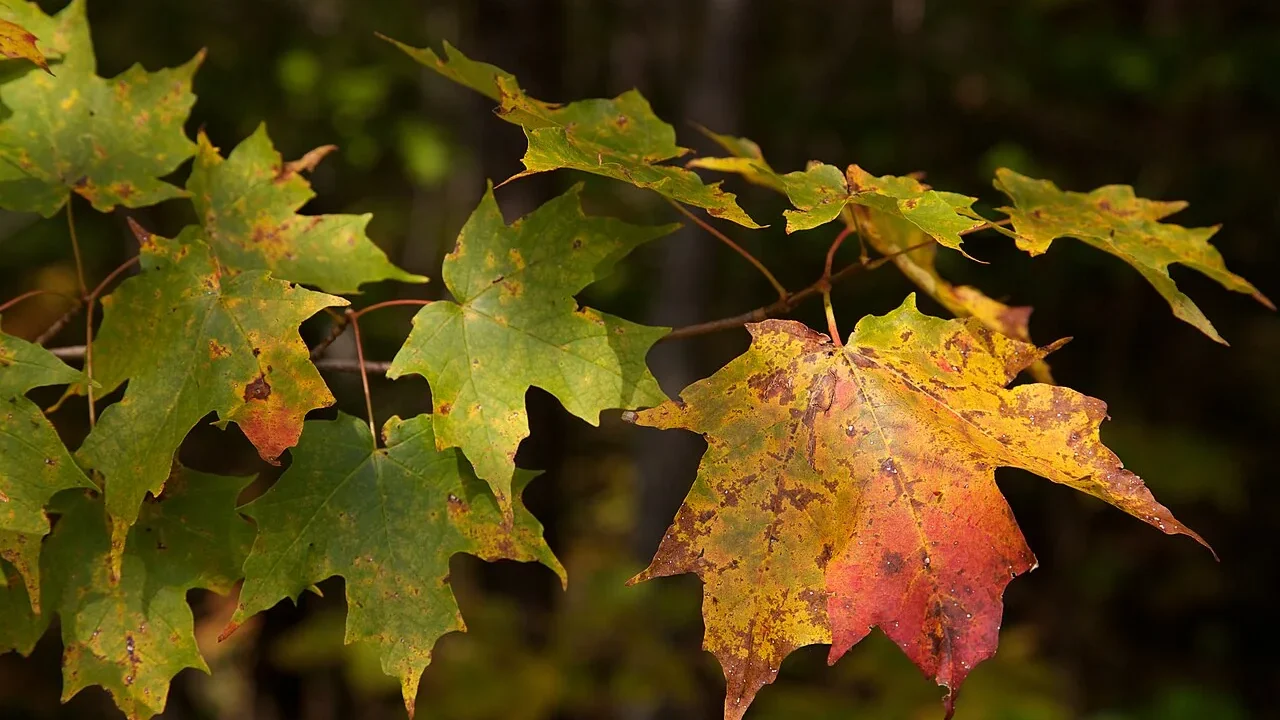
A yellow leaf may be showing a color that was there all summer. A red leaf can be doing something distinct: making fresh pigment as the growing season ends.
The canopy is not simply a green curtain wearing thin. Part of it is changing its chemistry.
That is the quiet surprise behind why leaves turn red in fall. Look closely at one branch, and the season becomes a story of light, sugar, and a tree preparing to let go.
Green fades and other colors appear
Chlorophyll helps leaves capture light for photosynthesis. As shorter autumn days signal seasonal shift, many deciduous trees stop replacing it as quickly. Chlorophyll breakdown exposes yellow and orange pigments already present in the leaf, while some species also build new red or purple anthocyanin pigments during autumn.
The result depends on the tree. A birch and a maple do not carry the same pigment mix or respond in exactly the same way.
This is why a hillside can hold gold, scarlet, and green at once. It is not one shared paint spreading through the woods, but many living systems reaching distinct stages of a seasonal shift.
Red can begin with sugar
In many red autumn leaves, sugars and light help support pigment growth. Cool nights can slow the movement of sugar out of leaves while sunny days still let them make it. Studies of sugar maple leaves connect these changing sugar conditions with differences in the strength of autumn redness.
Anthocyanin pigments give many fruits and flowers their red, blue, or purple tones. In an autumn leaf, they add color rather than merely uncovering an older shade.
A single tree can therefore look patchy. Sunlit outer branches and shaded inner leaves may have distinct light and sugar conditions, even while sharing the same trunk and roots.
Related Stories
Why spend energy on a falling leaf?
Leaf nutrient recovery gives a tree a reason to manage its leaves carefully before they drop. One answer proposes that red pigments help protect aging leaf tissue from excess light, allowing useful nutrients to move back into the tree. Other proposed roles stay under study and may vary among species.
This is a more subtle story than leaves simply dying. A tree can recover nutrients while sealing the place where a leaf will detach.
Research teams also examine whether color affects insects. Those ideas are not all settled, and one appealing theory should not become the only answer for every red leaf.
Evolution rarely leaves such a simple label on a branch.
Weather shifts the show, not the cast
Fall foliage colors depend on species, seasonal timing, and weather working together. Bright days and cool nights can favor vivid reds in suitable trees. Drought, hard freezes, and storms may shift the timing, dull the display, or remove leaves before their colors reach a strong peak.
A frosty night is not a painter brushing red onto the woods. Some leaves already contain plenty of pigment before a frost arrives.
For a small outdoor test, revisit the same branch over several days. Compare its sunny and shaded sides, and note the weather.
The changing details are more revealing than expecting every tree to turn on a single perfect autumn morning.
Frequently Asked Questions
Autumn color combines the loss of green with the presence or making of other pigments. Yellow and red do not always form in the same way. The clearest answer considers the tree species first, then looks at light, temperature, water, and the progress of the leaf’s seasonal shifts.
Are red pigments hidden under green all summer?
Not necessarily, because many leaves make much of their autumn red pigment during the seasonal shift. Yellow and orange pigments are often already present and become easier to see when green fades.
Does frost make leaves turn red?
Frost is not needed to create red autumn leaves. Cool nights can help suitable conditions form, while a hard freeze may damage leaves and shorten the display.
Why do leaves on the same tree shift at distinct times?
Leaves can differ in light exposure, age, and local conditions. Those differences can affect pigment growth and the pace of seasonal shift, creating several colors on one tree.