

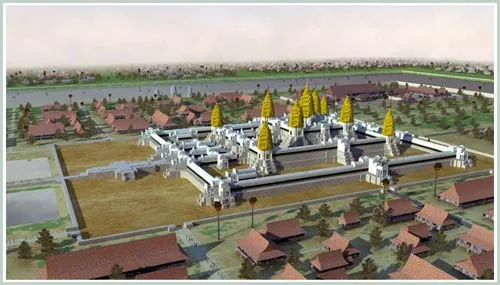
The towers draw your eyes upward. The lines in the ground ask you to look wider. Around Angkor, canals, fields, embankments, and great pools formed a city far larger than a temple visit first suggests.
The Angkor water system tells a story of seasonal rain, patient upkeep, and the risks that come when many places depend on linked routes.
Stone temples were only part of the city
Angkor was a wide settled landscape with farms, roads, homes, and waterworks, not just a few temples in empty forest. Many traces survive as low earthworks rather than tall stone walls. Mapping those features helps show how different places were joined and how people used the land between them.
A shallow ditch under plants is not. Yet a ditch may reveal where water once moved, just as a road shows where people traveled. Both help bring the space around a famous monument back into the history of the people who lived there.
Rain arrived in a strong seasonal rhythm
Monsoon rains bring wet and dry seasons, making water storage and routing useful to farms and settlements. Khmer engineers built and changed structures across the landscape over time. The system was not one finished plan that appeared on a single day and then worked forever without repair or new choices.
Too little water can hurt a crop; too much can damage ground and structures. A route that served one area well might need to change as people built new homes, opened fields, or altered the land farther upstream.
Related Stories

Big pools could have more than one use
Baray reservoirs are large water features whose roles have been studied and debated. Storage, farming, ritual, and links to nearby works all matter to those questions. Size alone does not prove one purpose, and different structures need to be judged from their own evidence rather than given one label.
Useful work and sacred meaning can share one place. A pool near a temple may shape the ground while also carrying a religious role. There is no need to choose only one in advance.
Maps, dates, links, and old records help test how those uses might have fit together.
A linked route can carry trouble as well as water
A canal network can guide water across a wide area, but flood damage or blockage may spread its effects along the same links. Sediment build-up changes how much a channel holds and where flow goes. Upkeep is part of how the system works, not an optional task after building ends.
Water can cut a new path when a bank breaks. One place may flood while another gets too little. A design that spreads a useful supply under normal conditions can transmit stress when rains are too strong, channels fill with silt, or a key section no longer does its job.
Water is part of a wider story of change
Studies of drought, heavy rain, and damaged waterworks help explain Angkor's changing fortunes. Political and economic shifts also shaped where people lived and how power worked. The evidence should not become a tale in which one storm emptied the whole city at once and every other cause stopped mattering.
That wider view makes the place more human. The towers remain a grand sight, but the quieter lines around them reveal much of the work behind that sight.
Frequently Asked Questions
A map of Angkor shows a city and monuments. The questions below place its water features within that larger landscape and a long history of change. They keep the evidence for water stress apart from a simple claim that one failure explains every event and every move people made.
Was Angkor only a group of temples?
No, the temples stood within a much wider area of homes, farms, routes, and waterworks. Many traces are low features in the ground, so they can be harder to see than the surviving stone buildings.
Were all the reservoirs built only to water crops?
Their roles are more complex and have been debated. Teams study each feature and its links, allowing for practical and sacred uses rather than assuming that every large pool served one identical task.
Did one flood destroy the whole city?
That is not a sufficient explanation. Water stress belongs within a longer story that also includes drought, upkeep, political change, and shifting trade and settlement, rather than one instant when the entire city vanished.





