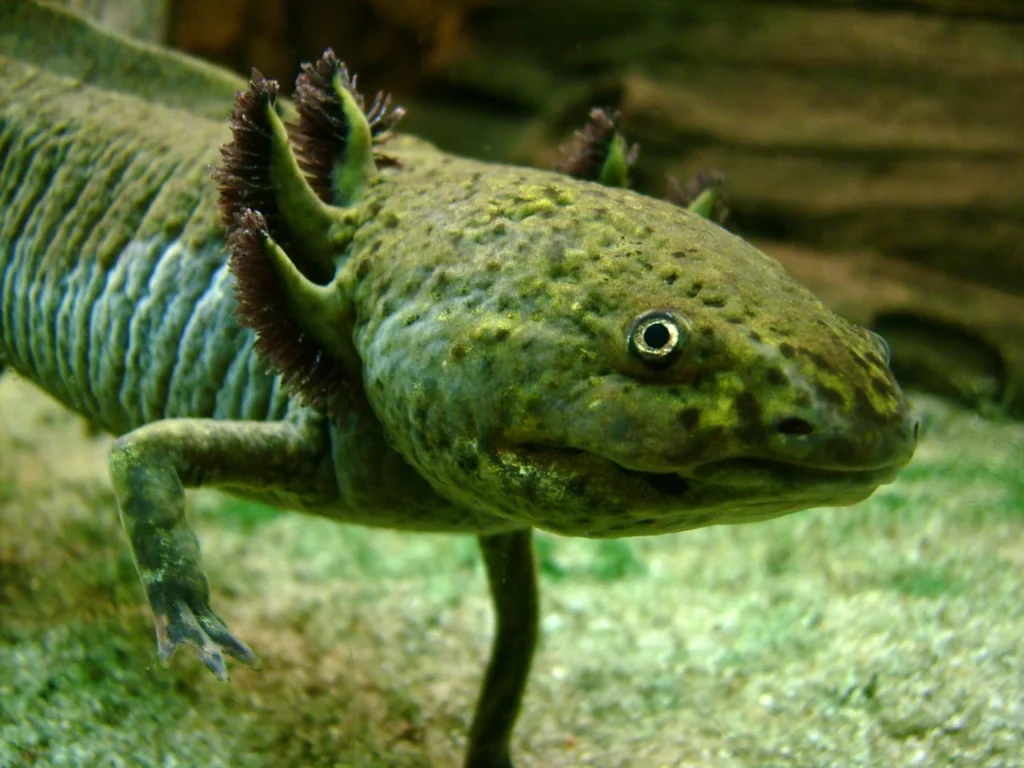
A missing foot can be followed by a new one, complete with toes arranged in the right places. For an axolotl, repair can include rebuilding rather than sealing a wound with a permanent scar. How axolotls regrow limbs reveals a quiet feat of organization, carried out by cells with distinct jobs.
The Wound Becomes a New Starting Point
Limb regeneration begins with a coordinated response to injury, such as the covering of the wound and changes in nearby tissues. A growing structure called a blastema forms beneath the specialized wound surface. This is not just a lump of cells, but a developing system with several cell populations.
Closing a wound and growing a limb are not the same job. One shields the body from harm. The other must replace parts that are gone.
The axolotl links those jobs through signals that let repair keep going, rather than stop when a new skin covers the wound.
Cells Need Instructions About Place
Connective tissue plays a key role in the developing limb, and positional information helps cells contribute to an appropriate pattern. The body must rebuild structures in useful relationships, not merely make more tissue. A new limb needs the right arrangement of parts and enough cells to fill the space.
More bricks do not tell a builder where to put a door. A growing limb faces a related problem. It needs enough cells, but also a plan for where they belong.
The body must sort a wrist from a finger and join new parts to the tissue that is still there.
Regeneration Is a Team Process
Blastema cells interact with nerves, the wound surface, immune responses, and the nearby tissue setting. Distinct cell types contribute in distinct ways. And many retain limits on what they become.
The process is therefore more exact than the idea that any cell can become any missing body part.
A team can mark cells and watch where they go. That lets it test a claim about which cells make which parts. One new signal may help explain a step.
It does not mean that a single switch controls the whole task, from the first wound to the last toe.
Why This Does Not Mean Humans Can Do It Yet
The Mexican salamander offers a powerful model for studying regeneration. But a discovery in axolotls is not a ready treatment for people. Human tissues respond differently to injury.
Scientists must understand the biology and test ideas before claiming that a full human limb can be rebuilt in the same way.
A power to regrow a limb does not make an animal hard to kill in every way. Wild axolotls still need a place to live. Clean water and a safe habitat matter.
A lab full of healthy animals cannot by itself show that the species is doing well in its home waters.
Frequently Asked Questions
These questions focus on the cell cluster, the range of cell behavior, and the distance between basic biology and medicine. Regeneration needs coordination. More growth alone is not enough because a useful limb must rebuild the right tissues in the right positions and connect them properly.
What is a blastema in an axolotl?
It is a developing mass of cells involved in rebuilding a missing structure. The cells are not all identical. And their behavior depends on signals and nearby tissues.
Can any axolotl cell become any body part?
No, cell contributions are more constrained than that. Scientists study how distinct populations retain identities or change state during regeneration.
Can this research already regrow a human arm?
No, full human limb regrowth is not an established treatment. Axolotl findings help scientists ask better questions, but translating them needs much more work.
Featured image: LoKiLeCh · Source · by-sa/3.0. Resized proportionally and converted to WebP when downloaded. No crop.
