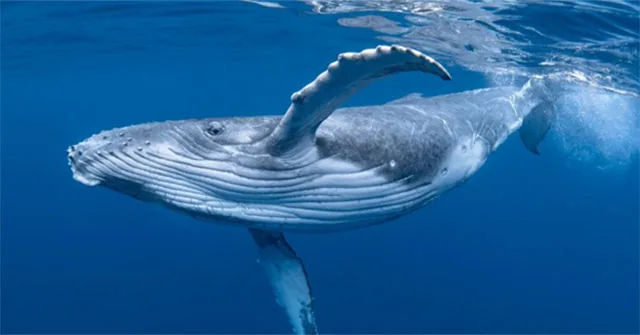
A whale must return to air, yet it also needs rest. That simple conflict makes how whales sleep a far stranger question than it first appears. The answer is not one universal posture, and it certainly is not a human nap moved underwater.
Different whales manage awareness, movement, and breathing in different ways.
Air breathing sets the terms of rest
Whales are marine mammals that breathe with lungs rather than gills. Their breathing involves surfacing, opening the blowhole, and exchanging air before another period underwater. Sleep must fit this pattern, but the details vary among species, so one familiar image of a floating whale cannot describe the entire group accurately.
Water closes off a route that land mammals usually have continuously available. Rest therefore has to work within the animal's diving and surfacing behavior.
The challenge does not mean that whales never sleep. It means researchers must look for sleep using methods suited to life at sea rather than relying on the appearance of a motionless body.
One side of the brain can rest differently
Some studied cetaceans sleep with different activity in the two brain hemispheres. This can help support movement and awareness during rest. The evidence is not equally complete for every whale, so a finding in dolphins should not become a blanket claim about all species.
The two sides do not simply become separate minds. The term describes a pattern in brain activity, with important differences from the sleep most people experience at night.
Direct recordings provide stronger evidence than an observer's impression. A whale moving slowly may be resting, but its brain state cannot always be read from the surface alone.
Related Stories


Posture offers clues, with important limits
Whales may rest while floating, swimming slowly, or staying quiet below the surface. Sperm whales have been observed in near-vertical groups during apparent rest. Posture offers useful clues, but a still image cannot measure the brain state or explain every part of the behavior.
Researchers examine how long the behavior lasts, how the whales respond, and what they do before and after it. Repeated observations help turn a striking scene into a clearer biological pattern.
Life at sea makes sleep hard to measure
Studying sleep in large free-ranging whales is difficult because the animals travel, dive, and spend much of their time beyond human sight. Tags, surface observations, and other recordings provide different evidence. Each method has limits, and conclusions need to match the features that the instruments actually measured in that study.
A movement tag can reveal posture and diving, but it does not automatically provide a full brain recording. An animal in a managed setting may also behave differently from one ranging freely.
Quiet whales deserve room as well as attention
Resting whales need space to continue normal behavior. Responsible observation follows local rules and avoids disturbance. Scientific interest concerns how rest fits breathing, movement, and life at sea, rather than how closely a boat can approach an animal or how dramatic a photograph it can obtain.
That is what makes whale sleep compelling. The ocean has not removed the need for rest. It has shaped different ways of meeting that need while keeping access to air.
A blow at the surface marks an exchange of air, not a jet of seawater forced from the stomach. Its form depends on the animal and the weather.
Unihemispheric sleep, surface breathing, and resting behavior describe related but distinct parts of this research question.
Frequently Asked Questions
Most confusion comes from treating all whales like one studied species or assuming that a still animal must be fully asleep. These answers separate lungs, behavior, and brain activity. The strongest explanations state which cetacean was studied and what evidence supports the claim, especially when describing animals living far offshore.
Can whales breathe underwater while asleep?
No. They use lungs and must obtain air at the surface. Sleep and rest have to fit their breathing and diving patterns.
Do all whales sleep with half a brain?
That pattern is well documented in some cetaceans, but evidence varies across species. It should not be stated as equally established for every whale.
Why do sperm whales sometimes hang vertically?
Such groups have been observed during apparent rest. The posture is a behavioral clue, but it does not alone reveal every detail of their brain activity.