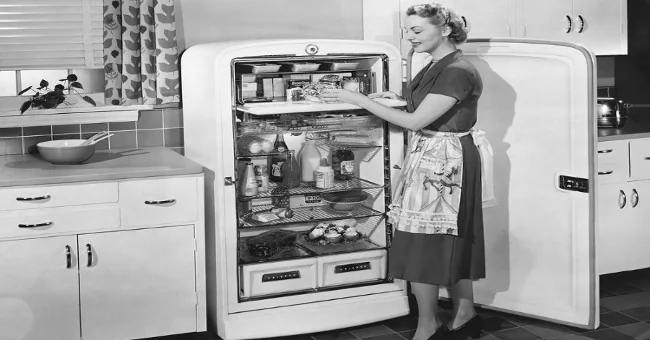
Before a motor hummed in the kitchen, a block of melting ice stood between supper and spoilage. Someone had to buy it, carry it, and empty the water below. Refrigerator history follows the long effort to make cold dependable, turning a seasonal resource into a service many households now expect each day.
People used cold long before household machines
Icehouses, cool cellars, and shaded storage helped people slow food spoilage before electric refrigeration. These methods depended on local climate, labor, and access to ice or cool ground; they were useful but uneven. So a cold meal in summer could reflect a large amount of work hidden from the table.
Stored ice was a stock that kept shrinking. A cool meal in warm weather could hide a great deal of work. The cold did not arrive just because someone had built a thick wall around a store room.
An icebox organized cold without creating it
Iceboxes placed a block of ice near stored food inside an insulated cabinet. As ice melted, it absorbed heat from its surroundings and water had to drain away; the box improved household cold storage. But it still relied on fresh ice deliveries rather than a machine that moved heat continuously.
A block of ice needed room inside the cabinet. As it melted, the house also needed a way to drain the water. Opening the door let more heat in.
The box was useful, but its cold supply ran out and had to be bought and brought home again.
Related Stories


Refrigeration moves heat rather than manufacturing cold
Vapor compression systems circulate a fluid through changes in pressure and temperature to move heat from inside a cooled space to the surroundings. Evaporation helps absorb heat, while compression and condensation allow heat to be released elsewhere; the exact design varies. But the appliance depends on a complete cycle.
The warm air behind a fridge is part of the clue. Heat has left the inside and reached the room. The machine's work adds heat too.
Leave the door open and the kitchen does not gain a free source of cold; the full cycle has to be counted.
Safer fluids and practical designs shaped adoption
Refrigerants, seals, motors, insulation, and manufacturing all influenced the spread of home refrigerators. Early systems had practical and safety limits that later designs tried to reduce. The appliance did not arrive through one perfect invention, and a history follows improvements and tradeoffs rather than naming one person for every stage.
Leaks, fire risk, cost, and effects on the air all shaped new designs. Better parts also made home use easier. There was no one day when a perfect machine arrived and every hard choice went away.
A cold cabinet changed habits without making food timeless
More dependable cold storage helped households shop, cook, and keep food in different ways. It supported wider food distribution when joined to refrigerated transport and shops; Cooling slows many spoilage processes. But it does not make every food safe forever or remove the need for clean handling and suitable temperatures.
A fridge at home is one link in a longer chain. Food may have passed through a cooled truck, store, or warehouse first. Each stage matters.
Cold slows many changes, but it does not erase poor handling or make a fresh item safe to keep for as long as we like.
Frequently Asked Questions
Ice and a fridge both keep food cool, but their heat stories differ. These questions trace the melting block and the machine that moves heat. They also show why cold helps without making food last forever, and why one appliance belongs to a much larger chain of storage and transport.
Did an icebox make its own ice?
No, the old icebox needed a supplied block, which slowly melted while taking up heat. The household had to replace that ice and drain away the water left as the block shrank.
Why is the back of a refrigerator warm?
Heat from inside has to go somewhere, and the machine's work adds more. The warm outside is part of moving heat into the room, not a sign that cold has vanished into nothing.
Does refrigeration stop every cause of food spoilage?
No, it slows many changes but does not stop all of them. Food type, time, clean handling, and the actual storage temperature still matter, even when the cabinet seems to work well.