

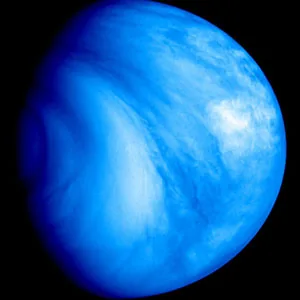
A brilliant point hangs above the dusk, far brighter than the nearby stars. Someone films it through a shaking phone and sees a strange changing shape. Venus UFO reports often begin with a real and striking sight, then grow as a familiar planet meets an strange angle, a poor reference, or an overworked camera.
A bright planet can stand out before the stars
Venus reflects sunlight and can look much brighter than nearby stars. As an evening star or morning star, it often stands out near twilight. That can surprise someone who expects a planet to be faint, chiefly when few other lights in the sky have appeared to give scale.
The word star here is an old name, not a physical label. Its position relative to Earth and the Sun changes the view, so an odd-looking brightness is a reason to check a chart before choosing a story.
Reflected light does not reveal a vehicle's shape
Reflected sunlight reaches the eye from Venus as a small point in a normal view. The glow can look larger because of air, eyes, or a camera. A bright patch in a photo need not show the true edge of the body that made the light or reveal its shape.
A point can cover many pixels once focus and exposure spread its light. That patch may look like a disk without giving a true picture of a planet's edge. Its size on a phone screen is not a direct ruler for the size of the distant source itself.
Related Stories
Zoom can make an ordinary point look unfamiliar
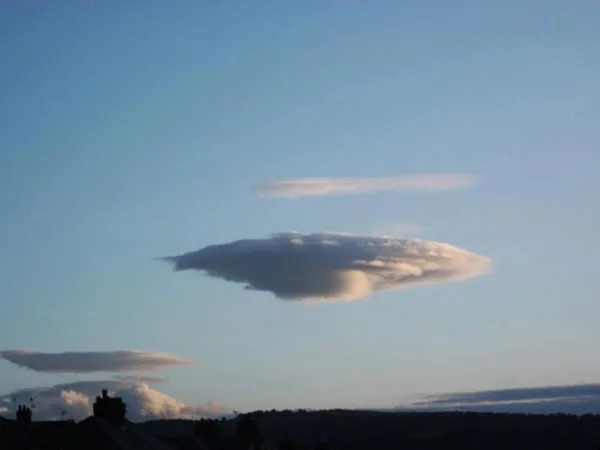
Camera zoom, digital enlargement, focus errors, and hand motion can turn a point into a ring or shifting blob. Those shapes do not always trace an object's outline. A video needs an optical check before its changing patch of light becomes proof that a craft is rotating or reshaping itself.
The camera moves too. A tiny shake grows large when the view is enlarged, and autofocus may hunt in a scene with little detail. A strange frame is part of a sequence made by a device, not a perfect window with no effects of its own.
A moving observer can create misleading motion
Horizon clues help test a light's motion. A far planet may seem to follow a moving car because nearby scenery shifts much faster across the view. Without fixed reference points, the viewer can mistake a change in their own position for a light moving beside them.
Stop only where it is safe, then compare the light with a fixed landmark. Record time and direction. That gives a much stronger test than a feeling from a moving window, where the road, trees, and camera all change the frame as the vehicle goes along.
A sky check can test a planetary explanation
Angular position can be checked with date, time, and place against a reliable sky chart. A match supports a Venus explanation; a mismatch calls for other options. Naming one sighting does not solve every unexplained report, but it shows how ordinary details can test a claim without mocking the witness.
The result may be a clear planet or a case with too little data, and both are more honest than forcing every light into the same answer.
Frequently Asked Questions
A bright point can look strange when the scene has few steady guides. These questions connect the planet's light with the eye, the camera, and a moving view. A answer still needs place and time; saying Venus sometimes causes confusion does not make it the cause of every unexplained light.
Why is Venus sometimes called the evening star?
It can be very bright after sunset when its position is right. Star is an old descriptive name here; Venus is a planet lit by the Sun rather than a star making its own light.
Does a changing ring in a zoomed video prove rotation?
No, Focus, shake, optics, and processing can all alter a point's image. Check the full recording and camera behavior before treating a changing ring as the edge of a body that is turning in space.
Can every UFO sighting be explained as Venus?
No, Each case needs its own check against time, place, and direction. Some reports may fit Venus well, while others involve different objects or data too weak to choose one firm explanation.





