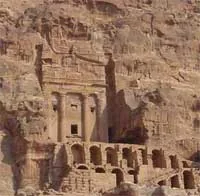
Petra's carved facades seem to rise from dry stone, but a city cannot live on a beautiful wall. It needs water when rain stops and protection when rain arrives too fast. The Petra water system reveals the practical intelligence beneath the spectacle: collect, guide, store, and control a resource that could sustain a settlement or threaten it.
A desert setting made water a central task
Petra needed more than carved facades and trade routes. Nabataean engineers collected, moved, stored, and controlled water in a demanding landscape. Their channels and reservoirs helped support daily life, while works that managed runoff also addressed the danger of sudden heavy rain in dry terrain.
The challenge was to make useful flows available when needed while preventing sudden, destructive ones from taking the same route through occupied spaces.
Channels turned slopes into collection routes
Rock-cut channels guided water along planned routes. Their slope, links, and position help explain their purpose. A groove viewed alone tells less than a route traced from its source through control points and storage, especially where repairs or later changes altered the original layout.
A channel's position can reveal what it collected and where it delivered the water. Breaks, repairs, and later alterations complicate the reading.
This is why a single photograph rarely explains the whole route. A useful plan connects source, conduit, control point, storage, and destination instead of assuming every carved groove served the same purpose.
Related Stories

Storage helped bridge gaps between supplies
Cistern storage helped bridge gaps between periods of supply. Water still had to reach the tank, stay usable, and remain accessible. Sediment, leaks, and blocked channels could reduce the benefit, so ongoing cleaning and repair belonged to the system as much as its first design.
The hidden labor matters here as much as the initial design. An impressive structure can lose its value if the routes feeding it become blocked or its stored contents are neglected.
Sudden rain could be a threat as well as a gift
A dry climate does not prevent flash floods. Heavy rain can rush through narrow ground and channels with little warning. Petra's engineers therefore managed excess flow as well as scarcity, directing some water toward storage while keeping dangerous runoff away from occupied spaces and structures.
A narrow passage can concentrate moving water. The same landscape that creates a dramatic approach to the city can create a demanding hydraulic problem.
The monuments belong to a working urban landscape
Petra was a working city, not just a group of monuments. Water supported homes, trade, travel, and public life. Its infrastructure also changed through time, so each feature needs a date and context before it is assigned to one builder, period, or purpose.
The site changed through time, so not every feature belongs to one builder or one moment. Dates and construction phases matter when assigning credit and function.
Water planning also has a social side. People need access points and rules for using and maintaining a shared supply. Archaeology can identify parts of the physical system more easily than every rule that governed it.
A sound account marks that limit. Finding a cistern shows storage, but does not by itself name every owner or user. The stone gives strong clues to what was possible, while the details of daily practice still need records and careful study.
Caravan trade needed water for people and animals, making the supply system part of Petra's wider connections with other places.
Frequently Asked Questions
The common questions concern whether Petra was waterless, what the carved channels did, and why flood control mattered in a dry region. These answers keep shortage and excess in the same picture. The system's details varied by location and period.
Did Petra survive without any reliable water planning?
No. Water collection, transport, storage, and control were important to the settlement. The monuments should be understood alongside the infrastructure that supported daily life.
Were all carved channels decorative?
No. Many formed part of practical water routes. Their purpose is best understood by tracing connections and considering slope, location, and the evidence for construction or alteration.
Why worry about floods in a desert?
Rain can arrive intensely and run rapidly through channels and narrow ground. A dry climate does not prevent dangerous short-lived flows, so flood management remains essential.