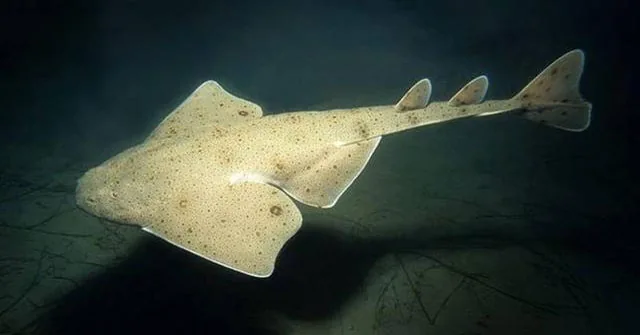
A fish thought known only from fossils appeared in a modern catch, turning an old branch of the family tree into a living encounter. The coelacanth became a symbol of deep time. Yet living fossils explained properly do not show evolution taking a holiday.
They show why a familiar body shape can hide a much more complicated history.
An old-looking body is not an unchanged genome
The phrase living fossil is an informal label for organisms that resemble ancient fossil relatives in notable ways. It does not mean that their genes, behavior, or physiology have stayed fixed. Every living lineage has continued through generations of inheritance and change.
That is why a modern animal should not be described as a specimen transported intact from the age of dinosaurs. It belongs to a living population with its own history since then.
Fossils preserve only part of an organism
The fossil record gives researchers valuable evidence, but it rarely preserves every feature needed for a full comparison. Shells, bones, and teeth survive more readily than many soft tissues or behaviors. A strong resemblance in those durable parts can coexist with differences that a fossil simply cannot show us directly.
Horseshoe crabs provide an obvious example of a recognizable form with an ancient history. That does not make every extinct relative identical to a species on a beach today.
Comparisons must also account for the age and relationships of the fossils. A similar outline alone cannot establish a direct ancestor or an exact rate of change.
Related Stories
Natural selection does not demand constant reinvention
Natural selection favors traits that affect survival and reproduction in a particular setting. It does not push every lineage toward a new shape at a steady pace. If a body plan remains useful, some features may persist, while changing conditions and other pressures still influence the population across successive generations.
There is no evolutionary finish line at which an animal becomes perfect. Environments change, and a useful feature in one place can be a disadvantage in another.
A stable-looking form can also reflect limits on what develops successfully. Scientists investigate these explanations using living organisms, fossils, anatomy, and genetics rather than assuming a single reason for every case.
Rediscovery changes knowledge, not the animal's age
Finding a living coelacanth changed human knowledge of its lineage. It did not show that one fish had lived for millions of years. The age of an individual, a species, and a wider evolutionary branch are separate questions that headlines can easily blur into one claim.
Keeping them apart makes the real discovery more impressive. A surviving branch can reveal features that fossils alone could not show, adding evidence instead of replacing one simplistic story with another.
Ancient lineages still face modern threats
An ancient lineage still faces present-day threats. Habitat loss, harvesting, pollution, and rapid environmental change can harm living populations. Conservation needs evidence about their numbers, breeding, habitat, and risks; a long fossil history does not guarantee that a species can survive every new pressure it encounters.
The better lesson is one of attention. An old-looking shell or fin is an invitation to ask what has persisted, what has changed, and what conditions the living population now requires.
A family tree is a better guide than a ladder. Two living species have both passed through the same amount of recent time, even if one keeps a form that resembles old fossils.
Coelacanths help explain why evolutionary change can occur without a completely new outline.
Frequently Asked Questions
Readers often confuse the age of a lineage with the age of an individual or assume that resemblance proves no evolution occurred. These answers keep those ideas separate. The label is useful for starting a discussion, but careful comparisons tell us more than the label itself about any particular organism.
Are living fossils still evolving?
Yes. Their populations continue to inherit genetic variation and change through time. Similarity in a few visible features does not mean that evolution stopped.
Is a coelacanth millions of years old?
An individual fish is not millions of years old. The phrase usually refers to the long history of its wider lineage and fossil relatives.
Are these animals primitive or inferior?
No. Living species are adapted to their own circumstances. An ancient-looking feature does not place an animal below others on a ladder of progress.