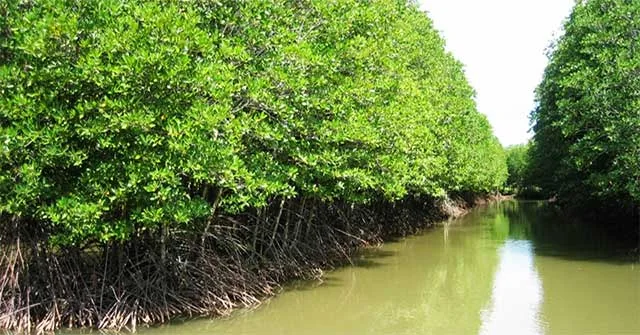
At low tide, a mangrove can look like a forest standing on a tangle of legs. Those roots are not a decorative extra. They help connect land, sea, mud, and life in a place that changes with every tide.
Why mangroves matter begins at that messy edge, where an ordinary-looking shoreline becomes a working ecosystem.
Salt and shifting water shape the forest
Mangroves grow in tidal wetlands, chiefly in warm coastal regions. Species use different ways to cope with salt, wet soil, and shifting water levels. Their success still depends on elevation, tides, sediment, and water quality; adaptation does not give every species unlimited tolerance of any shoreline.
Some limit salt entry at the roots, while others use additional ways to manage salt. Specialized roots can help with support or gas exchange, depending on the species.
The forest is therefore a group of different strategies, not one universal tree design. Its survival depends on the right relationship among elevation, tides, sediment, and water quality.
Roots can reduce wave energy and hold sediment
Coastal roots and trunks can slow moving water and help trap sediment. Under suitable conditions, this contributes to shoreline stability and reduces some wave energy. The degree of protection depends on forest width, density, species, water depth, storm conditions, and local geography.
This matters when projects promise rapid protection. Planting trees can be one part of a plan, but the surrounding coastal processes determine whether those trees establish and what they can do.
Related Stories

Sheltered water supports a crowded nursery
Roots and channels offer food and shelter to many animals. Some fish use these places while young, linking mangroves with nearby waters and habitats. Benefits vary by region, but the forest's role can extend beyond the tree line into food webs and fisheries used by coastal communities.
The system is busy even when it looks still. A patch of dark water between roots can be part of a much wider food web supporting coastal fisheries and wildlife.
Mud can store carbon as well as roots
Blue carbon refers to carbon stored in coastal and marine ecosystems, including mangroves. Carbon enters plant tissues, and substantial amounts can also accumulate in soils. Protecting those stores matters, but exact estimates depend on location, soil depth, measurement methods, and what happens to the land after disturbance or restoration.
A mangrove carbon claim should not rely only on the size of the trees. The ground beneath them may contain an important part of the store.
Restoration starts with the right place
Successful mangrove restoration requires suitable tidal conditions and ecological planning, not simply planting as many seedlings as possible. Some sites recover better when water flow and other conditions are restored first. Planting in an unsuitable place can fail or damage other valuable habitats.
The roots at the water's edge are only the visible beginning. The real value lies in a living connection among sediment, tides, carbon, animals, and human livelihoods that needs room to function.
Roots also change the flow of fallen leaves and fine particles. Small organisms feed on that material, and other animals feed on them. The food web therefore begins with processes that are easy to miss from a boardwalk.
The forest's worth cannot be counted only in large fish seen at one visit. Soil life, tiny prey, and seasonal movement help connect the visible trees with the wider coast.
Fish nurseries and reduced storm waves are two possible benefits, with local conditions shaping both.
Frequently Asked Questions
These questions separate ecological benefits from absolute promises. Mangroves can support shorelines, carbon stores, and wildlife, but place and scale matter. Restoration must fit the tides and respect other habitats; a muddy coast is not automatically an empty space where planting the most seedlings is best.
Do mangroves stop every storm surge?
No. They can reduce some wave energy and support coastal resilience under suitable conditions. They do not replace a wider risk assessment or guarantee safety in every storm.
Why are mangrove soils important for carbon?
Organic material can accumulate in waterlogged soils over time. The amount and persistence vary, so measurements should include the soil rather than only the visible trees.
Is planting more seedlings always the best restoration method?
No. Restoring suitable water flow or allowing natural recovery may be important. Site conditions and ecological evidence should guide the method before planting begins.