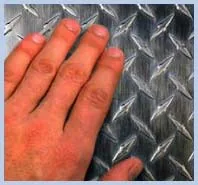
A metal chair and a wooden bench sit in the same room all night. In the morning, one feels sharply cold and the other does not. Why metal feels colder is not usually a tale of two temperatures.
It is a tale of how quickly each surface takes heat from your skin.
Touch responds to a changing flow of heat
When skin is warmer than an object, heat moves out of the hand and toward the object. The speed of that flow helps make it feel cold. Fast heat loss can make one surface seem colder than another at that temperature, even after both spent hours in the same room.
A hand is not a small thermometer. It is part of the event that starts at contact. The skin cools, the patch beneath it warms, and heat keeps moving through both.
What we feel comes from that changing exchange, not just a number the object had before the touch.
Metal can carry heat away from the contact
Thermal conductivity tells how readily heat moves through a material. Many metals carry it away from the contact patch well. A wood surface usually does that less well, so its local patch warms sooner and slows further heat loss from skin, despite both starting at the same temperature.
That helps keep drawing heat from the hand. Wood's local patch is less able to pass the heat along, which is why the first cold feeling can fade.
Related Stories



Temperature still matters alongside the material
A metal object is not always colder to touch than wood. If both are hotter than your skin, heat can flow toward your hand, and metal may feel hotter instead. The direction of transfer changes with the temperature difference, while the material affects how quickly the exchange can proceed.
A cool spoon and a hot spoon make the point without changing the substance. The same ability to carry heat can create opposite feelings. This keeps the explanation grounded in heat transfer rather than treating coldness as a permanent quality hidden inside all metal objects.
Contact conditions change what the hand feels
Skin temperature, moisture, contact area, pressure, and how long you touch a surface can all affect the feeling. A thin metal coating on an insulating backing may behave differently from a solid metal block. A material label alone therefore cannot predict every detail of an actual contact experience.
A smooth surface may make better contact than a rough one. A wet hand can change the exchange too. These ordinary details help explain why a lab comparison controls the setup instead of relying only on two objects that happen to look similar in a room.
A thermometer and a hand answer different questions
Thermal equilibrium allows objects in stable shared conditions to reach the same temperature despite different touch sensations. A suitable thermometer tests temperature more directly. A hand senses exchange, but a cold feeling alone does not prove that one surface has a lower temperature than the object beside it.
The distinction is useful beyond a winter bench. Handles, floors, and clothing all depend on heat flow as well as temperature. Designers choose materials partly to control that first moment of contact, making an everyday feeling a practical clue rather than a reliable temperature reading.
Frequently Asked Questions
Your hand is sensing an exchange, not reading a temperature dial. These questions compare that feeling with a thermometer and explain why the same metal can feel cold or hot. The direction of heat flow changes with the temperatures, while the rate also depends on the objects and their contact.
Can wood and metal really be at the same temperature?
Yes, After enough time in one stable room, both can reach similar temperatures. They may still feel different because one takes heat from the hand faster during the first moments of contact.
Why can hot metal feel especially hot?
If the metal is hotter than the hand, heat flows the other way. Its good conduction can then send heat toward skin quickly, making it feel hot rather than especially cold.
Is touching a surface a safe way to test whether it can burn?
No, Touch is not a safe test for an unknown hot surface. Use a suitable measuring method and equipment guidance instead of risking a burn to learn how fast heat would move into the skin.