A bright star flashes red, white, and blue near the horizon, almost like a distant aircraft. The star itself may be sending a fairly steady light. Why stars twinkle has more to do with the restless air above your roof than with sudden changes inside a sun many light-years away.
The atmosphere keeps changing the light's path
Atmospheric turbulence mixes air with different temperatures and densities. As starlight crosses these moving patches, its path bends by slightly changing amounts. The light reaching your eyes can vary in brightness and apparent position, producing scintillation, the rapid flicker we usually call twinkling when we look up.
The star's light has traveled a vast distance, but the last part of its journey can dominate its appearance. A thin moving layer near the observer can disturb an otherwise steady signal.
This explains why a cloudless sky does not guarantee sharp astronomical viewing. Transparency and steadiness describe different qualities of the air.
A distant star acts like a tiny point
Most stars appear as a point source to unaided eyes because they are so far away. A small atmospheric change can then alter the narrow bundle of light noticeably. The observer cannot average the disturbance across a broad visible surface, as with a larger apparent disk.
A telescope collects more light, but it still looks through the atmosphere unless it is above it. Distorted star images can blur, wobble, or spread.
The flicker is a reminder that seeing something clearly requires more than brightness. The stability of the path between object and observer also matters.
Related Stories

Planets usually look steadier for a reason
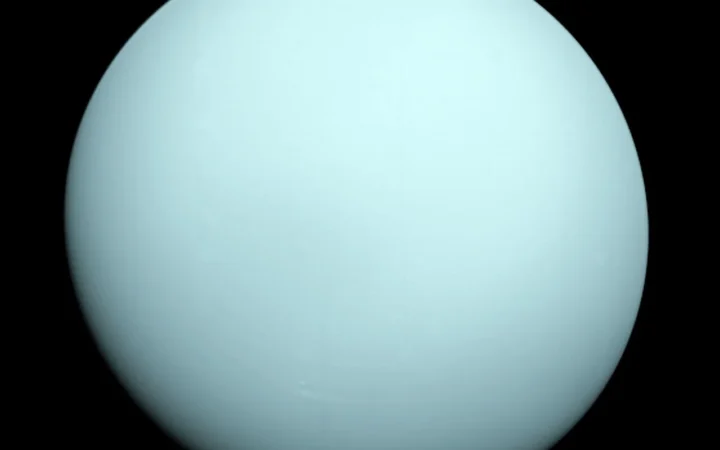
Planetary disks have a larger apparent size than most distant stars. Light arrives from many points across each disk, and atmospheric effects on those points partly average out. This often makes planets look steadier, although strong turbulence and a low position can still make a planet twinkle.
The rule is useful, but it is not a flawless identification test. A planet near the horizon may flicker enough to confuse a casual observer.
The horizon adds a longer stretch of trouble
Light from a star low passes through more atmosphere than light from a star high overhead. It encounters more opportunities for bending, scattering, and distortion. Color changes can become especially noticeable, creating a flashing effect that sometimes prompts reports of a mysterious moving or signaling object near the horizon.
The star may not actually be moving in the way the eye suggests. Small image shifts and changing brightness can make a fixed point feel active.
Comparing it with a landmark and watching for several minutes helps. A known bright star rising or setting can produce a surprisingly dramatic display without any unusual event occurring in space.
Astronomers work around the moving air
Adaptive optics uses measurements and rapidly adjusted optical elements to reduce some atmospheric distortion in telescope images. Other approaches include site selection and placing telescopes in space. These methods address limits, and none should be described as a universal way to remove every source of blur from every astronomical observation.
High, dry sites can offer important advantages, but local wind and temperature patterns still matter. Observatories study their surroundings as well as the sky.
A bright point that seems fixed to the sky can still drift slowly as Earth turns. That motion is separate from rapid twinkling.
Frequently Asked Questions
Twinkling raises questions about stars, planets, and the quality of the night sky. The key is to separate changes in the object from changes in the light's route. These answers describe the familiar rapid flicker seen, rather than every genuine variation that astronomers can measure in stellar brightness.
Do stars twinkle when viewed from space?
The familiar atmospheric effect is largely absent above Earth's air. A star may still have real brightness changes, but those are a different phenomenon.
Can a planet ever twinkle?
Yes, especially when low in the sky or seen through disturbed air. Planets usually look steadier because their light comes from a larger apparent disk.
Why does a star flash different colors?
Atmospheric effects can change how different wavelengths reach your eye. The effect can be strong near the horizon, where light crosses more air.