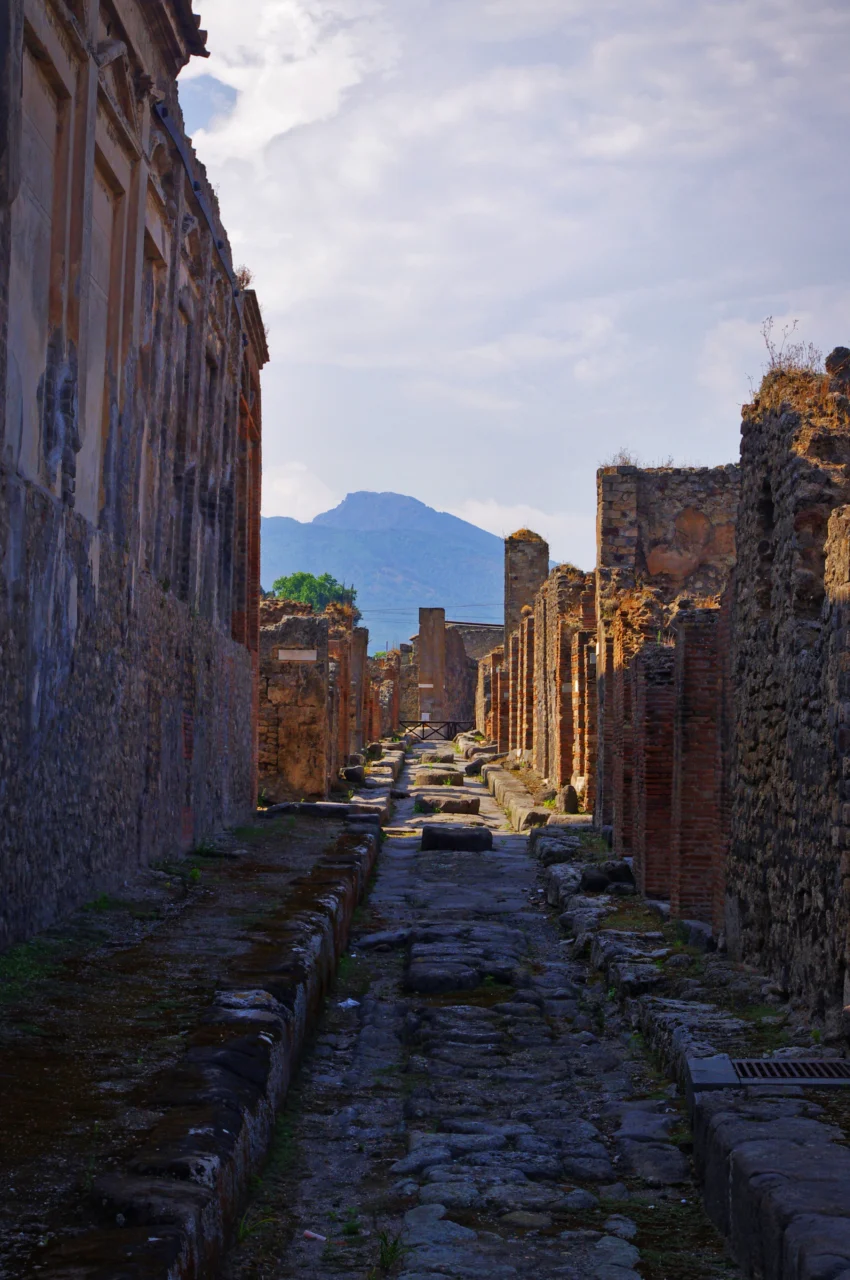
The shape of a hand can survive after the hand itself is gone. At Pompeii, hardened volcanic ash kept spaces where human bodies had once rested. Centuries later, liquid plaster entered those spaces and made the absent forms visible.
Pompeii plaster casts are both moving memorials and records that demand careful reading.
The Empty Space Inside the Ash
Pompeii plaster casts record spaces left when buried bodies decayed inside hard ash. Teams filled some of those spaces with plaster to keep the outer shapes. The figures are not people turned into stone.
They may hold real bones within the modern stuff used to make the cast.
What looks like a body is often a cast of the space that body left. Bones may still lie inside. The outer form can also hold traces of cloth.
To read it well, you must ask what came from the ancient ash and what came from the later plaster.
How the Eruption Built a Record
The Mount Vesuvius eruption in 79 CE buried Pompeii with falling debris and hot, fast flows. The layers broke lives but kept some traces. Each stage hit people in distinct places.
So one scene of death cannot explain all the remains found across the old town and its homes.
A roof could fail under falling stones before a hot flow reached the street. A doorway and a room were not the same kind of shelter. To work out a life’s end, a team needs the layers around the find.
One pose alone cannot tell the full sequence.
Related Stories
A Method That Made Absence Visible
Giuseppe Fiorelli developed the famous casting method in 1863. It saved shapes that digging might otherwise have lost. Today, teams can scan casts to see what lies inside.
They study bones and look for changes made by past digs, repairs, and moves to a new place for public display.
A cast can be patched, moved, or put on show in a new place. Those steps form part of its history too. A smooth surface may hide old repairs.
Good notes help later teams tell which features record the ancient event and which reflect the work done since the find.
Why We Should Be Careful With Stories
The casts offer archaeological evidence of real lives. But a pose alone cannot prove a name, a feeling, or a family bond. A moving label can spread before it is checked.
Stronger accounts combine the form with bones, notes from the dig, and other clues that test the story.
The figures do not need a made-up final speech to move us. A hand, a fold of cloth, or a small pair of feet is enough. Roman daily life also appears through houses, tools, and food.
We can feel close to these people without claiming to know each name or bond.
Frequently Asked Questions
The casts look so real that it is easy to miss how they were made. These questions separate bones from plaster and shape from a story about a life. They also show why a label may change when a team tests old claims with new tools and fresh clues.
Are the Pompeii casts actual petrified bodies?
No, most visible forms are casting material introduced into ancient cavities. Human bones may remain within them, which makes careful scientific study and respectful handling key.
When did archaeologists start making the casts?
Fiorelli developed the method in 1863. Later teams made extra casts and used distinct materials and recording techniques.
Can a cast prove that two people were relatives?
Not by posture alone. Scientists need other evidence, such as genetic data and archaeological context, and even those findings need careful interpretation.